
2026 Outlook for China & Global Digital Sublimation & Textile Printing Market
2026-08-12

Development Trend of Digital Textile Printing Industry in 2026
Based on the latest industrial data from China Dyeing & Printing Association, Zhiyanzhan Research Institute and China Digital Printing Network (2024‑2026), as well as the industrial logics from the reference article, this report systematically sorts out the core industrial trends of 2026 from six dimensions: market demand, printing equipment, ink consumables, environmental‑protection policies, digital technologies and market competition landscape. It is applicable for foreign‑trade promotion, enterprise research reports and industry analysis.
1. Demand Side: Wide Adoption of Small‑batch & Quick‑turnaround Orders; On‑demand Custom Printing Becomes Underlying Industry Logic
Restructured order mix with rising proportion of short‑run orders
Driven by fast‑fashion, cross‑border e‑commerce and personalized consumption of Gen‑Z customers, the industry is transforming from mass‑volume stock‑oriented production to demand‑driven manufacturing. In 2026, the proportion of small‑batch orders below 100 meters in Chinese digital printing factories will exceed 32%, and the figure will top 50% for leading flexible‑production manufacturers. Eliminating plate‑making cost, digital printing can finish pattern‑switching within 15 minutes and support single‑piece printing. It perfectly matches the short product‑update cycle of social‑media‑driven fashion trends (only 2‑4 weeks), and greatly reduces inventory depreciation risks for brands.
Expanding downstream application scenarios beyond garment textiles
Garment printing remains the core segment, accounting for more than 55% of total digital‑printing output in 2026. Home textiles, automotive interior fabrics, functional protective textiles and soft‑signage advertising become fast‑growing incremental markets:
Home furnishing: Output grows by 20.4% year‑on‑year in 2026, with booming demand for curtains, carpets and customized soft furnishings.
Industrial textiles: Digital‑printing penetration for automotive seats and interior fabrics keeps rising; leading auto brands realize mass production of digitally‑printed interior materials.
Functional fabrics: Yoga wear, swimwear and outdoor polyamide fabrics boost demand for acid inks, with an annual growth rate of 18% for polyamide printed textiles.
Growing demand from global emerging markets
Asia‑Pacific remains the world’s largest digital‑printing market. India, Southeast Asia, the Middle East and Africa register a 6.73% CAGR during 2026‑2031. Lacking local printing capacity, these regions keep importing Chinese‑made printing machines and sublimation inks, serving as key export growth drivers for domestic suppliers.
2. Equipment Side: Domestic High‑speed Machines Replace Imported Products; Single‑pass High‑speed Printers Dominate New Installations
Technological breakthrough of domestic printheads and continuous cost reduction
In 2026, the yield rate of self‑developed domestic printheads reaches 99.2%. The overall procurement cost of complete machines drops by 27% compared with 2020, while the market share of imported printheads and equipment keeps declining. Industrial‑grade 2.2m 8‑head & 16‑head sublimation printers and single‑pass direct‑to‑fabric printers become preferred options for capacity expansion. High‑speed models account for over 65% of newly‑installed units in 2026.
Standardized intelligent configurations: air‑expanding shafts, constant‑temperature dryers and auto take‑up systems
To support stable production with large‑roll media, newly‑released digital printers in 2026 are generally equipped with air‑expanding shafts, constant‑tension unwinding & rewinding systems and external constant‑temperature dryers. These configurations effectively minimize media shifting, uneven ink dots and material waste. Built‑in IoT modules enable remote monitoring of printing speed, ink consumption and drying temperature, realizing real‑time data transmission for full‑process digital management.
Stratified capacity layout with differentiated equipment portfolios
The industry forms a pyramid‑shaped structure: small workshops adopt low‑speed 4‑head machines for scattered orders; medium‑sized factories deploy 8‑head mainstream printers for mass‑volume production; large‑scale manufacturers set up multiple 16‑head high‑speed production lines with daily output up to tens of thousands of meters. The number of large factories with more than 10 units grows by 19% year‑on‑year in 2026.
3. Ink & Consumables: Sublimation Inks Maintain Dominance; High‑penetration & Eco‑friendly Water‑based Inks Generate New Growth
Stable market segmentation: disperse sublimation ink takes the largest share
Disperse sublimation ink remains the largest‑consumed category with 42.5% of total printing‑ink consumption in 2026, widely applied for polyester apparel and home‑textile transfer printing. Reactive ink (for cotton & linen fabrics) accounts for about 15.5%. Coating ink registers the fastest annual growth at 22%, while acid ink (for polyamide & silk) stays stable at around 3%.
High‑penetration functional ink becomes a hot‑selling incremental product
With the wide adoption of lightweight high‑density polyester fabrics, conventional inks tend to cause floating color and insufficient color fastness. Featuring deep color penetration, high color saturation and clean transfer effect without speckles, high‑penetration sublimation ink sees sharply rising purchasing demand from domestic and overseas factories in 2026 and turns into a high‑margin product for ink suppliers. For foreign‑trade quotations, CMY inks at USD 7.5 and K ink at USD 8.5 are mainstream price levels.
Complete domestic substitution & mandatory iteration toward low‑VOC eco‑friendly formulas
Imported‑ink price barriers are broken down by domestic alternatives. EU textile standards and OEKO‑TEX certifications force the phase‑out of high‑solvent inks. Low‑VOC heavy‑metal‑free water‑based inks become a must‑meet requirement for overseas orders. Non‑compliant ink products will gradually exit global markets.
4. Environmental Compliance: Decarbonization & Overseas Green Regulations Drive Low‑carbon Transformation of Whole Industry Chain
Environmental advantages shift from competitive bonus to market‑access threshold
Traditional printing consumes 200L water per kg of fabric, while digital inkjet printing cuts water consumption by 60%‑95% and energy consumption by 30% with greatly reduced wastewater discharge. In 2026, tightening domestic regulations on energy consumption and sewage discharge push small‑and‑medium‑sized dyeing plants to phase out rotary‑screen and flat‑screen equipment and switch to digital‑printing production lines.
Escalating global green trade barriers make full‑chain traceability a foreign‑trade necessity
The EU Sustainable Textiles Strategy and Digital Product Passport regulations take effect, requiring full‑chain traceability covering raw fabric, ink and printing processes. OEKO‑TEX and GRS certifications are no longer sufficient for large‑volume overseas orders. Only factories and ink suppliers with complete traceability documentation can secure stable orders from European and American brands.
Commercialization of water‑free printing technology accelerates
Supercritical CO₂ water‑free transfer printing enters small‑batch mass production, cutting carbon emission by over 60%. Leading enterprises have launched pilot production lines for this technology.
5. Deep Digital Integration: AI & Big Data Reshape Design, Production & Quality Control
AI‑assisted design shortens pattern‑development cycles
AI‑driven pattern generation, intelligent color matching and RIP color‑separation systems are widely adopted. New‑pattern development cycles are shortened from weeks to 3‑5 days, lifting R&D efficiency by 80% to satisfy frequent pattern‑update demands.
Data‑driven intelligent quality control for large‑scale manufacturers
In 2026, large‑scale printing factories widely deploy SPC systems to monitor ink output, printing accuracy and drying temperature in real time, keeping defective rate below 0.5%. IoT‑enabled printers connect order, production and warehouse data, automatically calculating ink loss and fabric utilization for precise cost control.
Booming print‑on‑demand business model
The global print‑on‑demand market achieves a 24.81% CAGR from 2026 to 2035. Cross‑border e‑commerce merchants and independent designers cooperate directly with digital‑printing factories, bringing sustained growth for inventory‑free customized orders and boosting demand for desktop‑size printing devices.
6. Market Scale & Industrial Pattern Forecast (Key 2026 Quantified Data)
Domestic market: The market size of China’s digital textile printing industry will reach RMB 37.221 billion in 2026, with a 14.1% year‑on‑year growth. Total digital‑printed fabric output will exceed 4.7 billion meters, accounting for 29% of China’s total printed‑fabric output.
Global market: The global digital textile printing market will hit USD 3.09 billion in 2026, with a 6.73% CAGR for 2026‑2031. Inkjet printing occupies 72% of the global market share as the dominant process.
Vertical integration becomes the core competitive strategy
Profit margins for pure‑processing printing factories keep shrinking. Integrated manufacturers covering weaving, digital printing and ink supply gain stronger competitiveness. Equipment suppliers expand upstream into ink R&D and downstream into turn‑key‑solution delivery, while standalone outsourced processors face increasing operational pressure.
Conclusion: Core Development Themes for 2026
The digital‑printing industry in 2026 evolves around five major themes: flexible manufacturing, domestic substitution, low‑carbon sustainability, intelligent digitalization and diversified...
For more knowledge about digital textile printing, including digital printing machines and inks, please contact Dolphin New Material Co., Ltd.
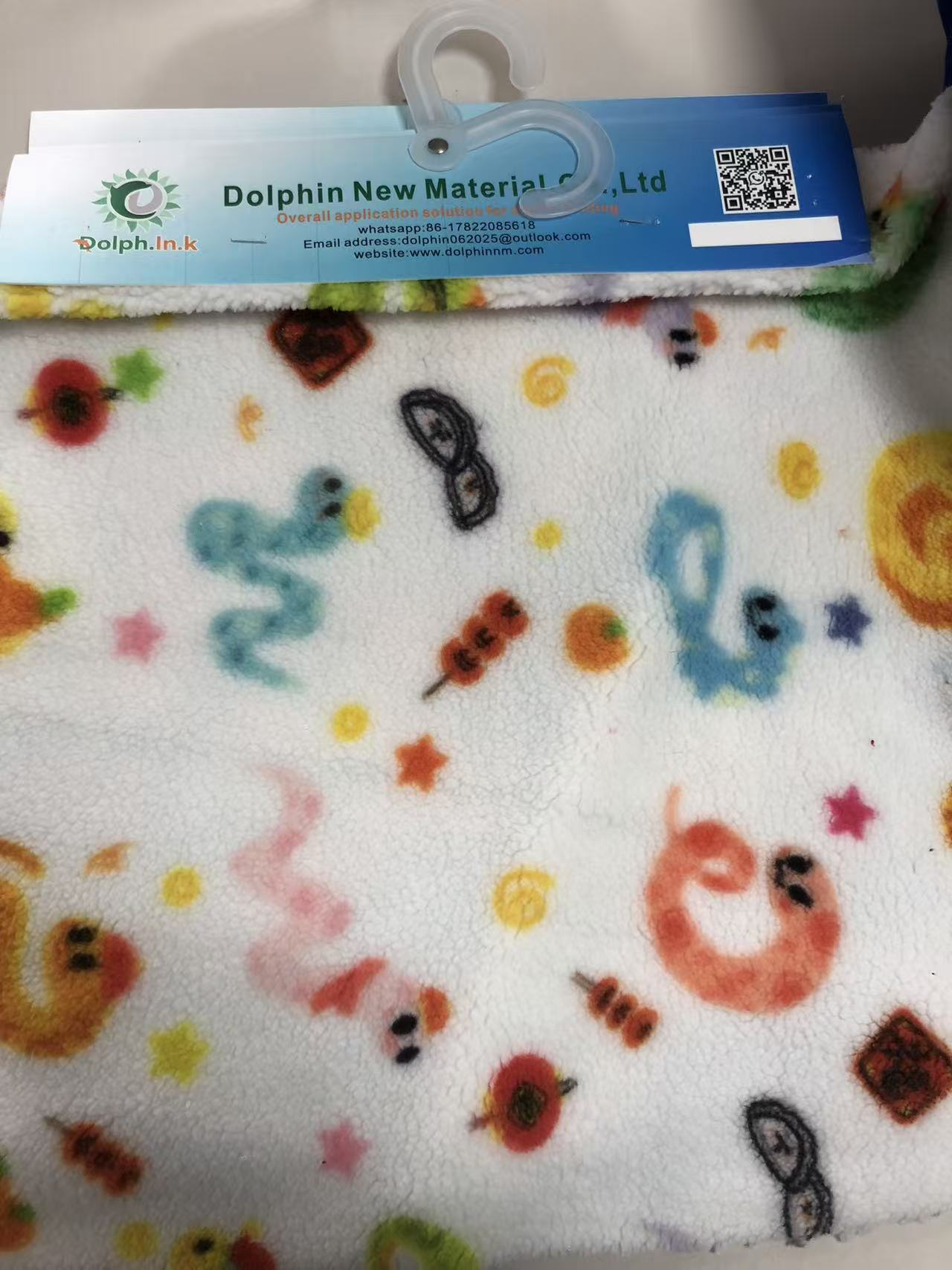
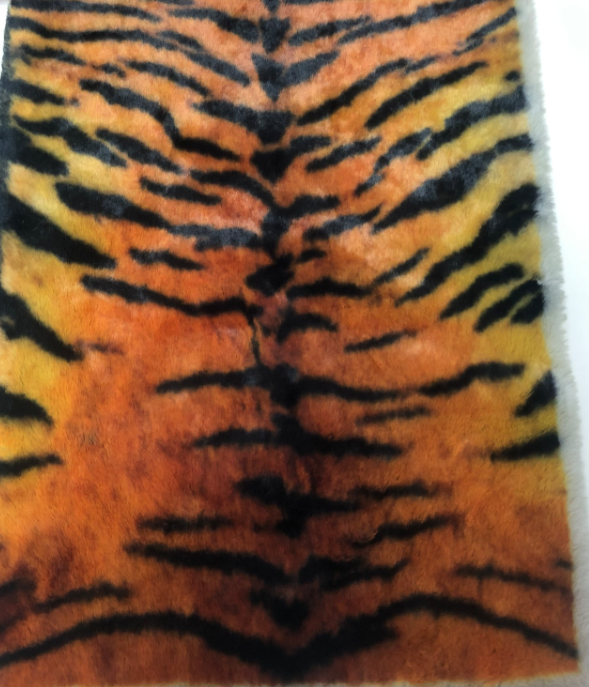
2026 Printing Process Guide: Full Sublimation Printing Workflow, Differences from DTG Printing and Policy Adaptability Analysis
Dolphin High-Penetration Ink | 30mm Deep Penetration for Polyester & Plush Fabrics
Related Article

When choosing an industrial fabric printing machine, it is important to consider more than just printing speed and price. Different digital printing technologies are designed for specific fabrics, production formats, ink systems and applications.
Industrial Fabric Printing Machine: A Complete Guide to Direct-to-Fabric, DTF, DTG and Sublimation Printing

This professional industry guide elaborates on the standardized workflow of thermal sublimation printing, and comprehensively compares its technical differences, application environments and production characteristics with DTG direct printing. It further analyzes the environmental compliance advantages and local policy adaptability of the two processes under current textile industry environmental protection standards.
2026 Printing Process Guide: Full Sublimation Printing Workflow, Differences from DTG Printing and Policy Adaptability Analysis
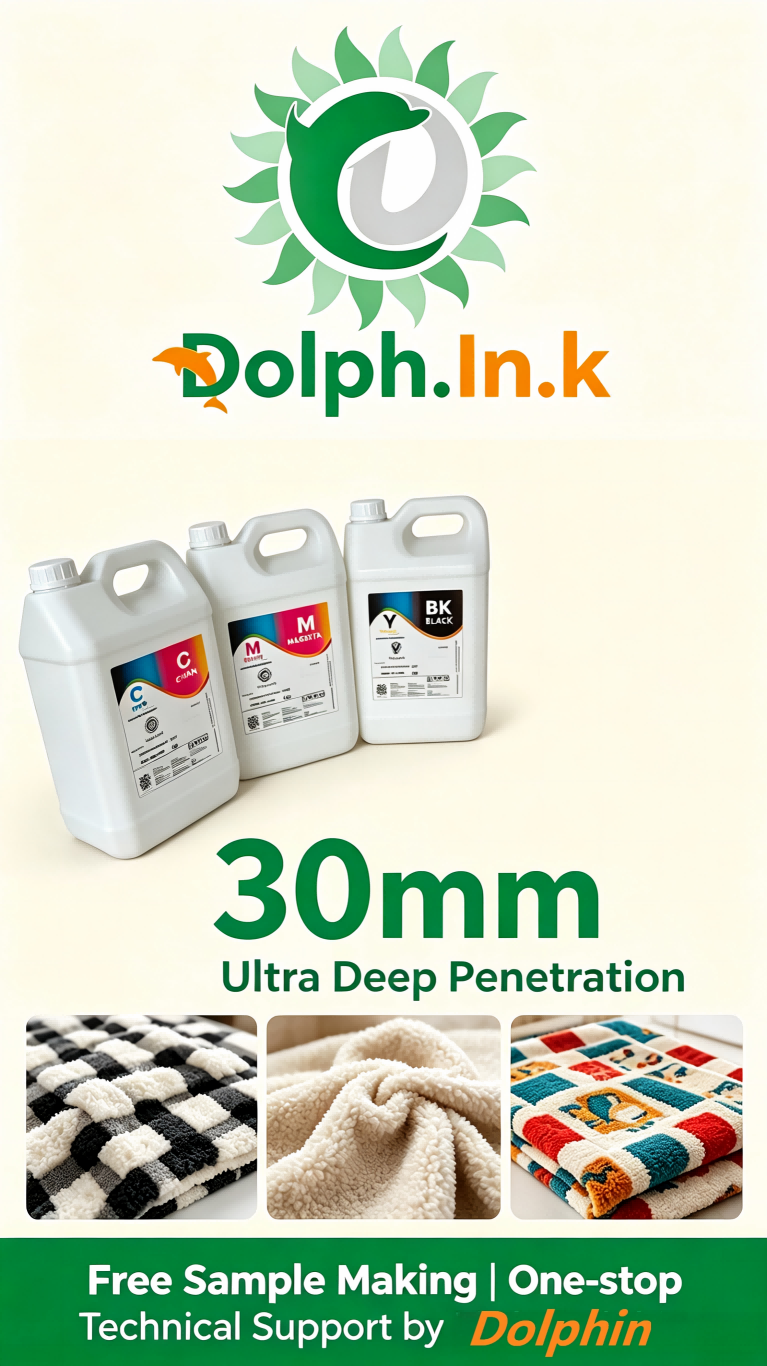
Dolphin high-penetration sublimation ink achieves up to 30mm penetration depth. Compatible with sublimation printers and heat transfer machines, it works for polyester and all wool & plush fabrics. We provide customized professional printing workflows for different materials and offer free sample testing to eliminate surface floating ink and uneven color on thick textiles.
Dolphin High-Penetration Ink | 30mm Deep Penetration for Polyester & Plush Fabrics

The much-anticipated 18th Qingdao International Textile Printing Industry Exhibition (referred to as the "Qingdao Printing Show") grandly opened at Qingdao Hongdao International Convention and Exhibition Center (No. 326 Huoju Road) on June 25, 2026.
Degao Jingdian and Weifang Lanyuan Textile reached a cooperation on-site at the Qingdao Printing Exhibition! The customer successfully placed an order for the Degao Jingdian M9-64 digital printing machine.