
2026 Printing Process Guide: Full Sublimation Printing Workflow, Differences from DTG Printing and Policy Adaptability Analysis
2026-08-20

2026 Printing Process Guide: Full Sublimation Printing Workflow,
Differences from DTG Printing and Policy Adaptability Analysis
With the professionalization and standardized upgrading of the digital printing industry, thermal sublimation digital printing has become a standardized mass-production process in textile apparel, advertising signage, home soft furnishing, cultural and creative products and other fields by virtue of its core technical advantages including high imaging accuracy, stable fabric compatibility, excellent physical finished product performance and green low-carbon attributes. Most practitioners in the printing industry have ambiguous understanding of the technical principles, applicable working conditions, production environment requirements and policy compliance boundaries between the two mainstream digital printing processes: thermal sublimation printing and Direct-to-Garment (DTG) printing. This paper systematically sorts out the standardized process flow of thermal sublimation printing, compares and analyzes the technical differences and scenario adaptation boundaries between thermal sublimation and DTG printing, and further explores the compliance advantages and industrial application prospects of the two processes in combination with the current national and local environmental protection and industrial upgrading policies of the textile dyeing and finishing industry, providing professional references for enterprises in process selection, production line upgrading and compliant production.
I. Complete Process Flow of Thermal Sublimation Printing
Thermal sublimation digital printing is an indirect digital printing technology based on the dye sublimation phase change principle. Its technical mechanism is as follows: special thermal sublimation dyes undergo a solid-to-gas phase transition into small molecular gases under closed high-temperature and high-pressure working conditions, penetrate into the interior of polymer fibers through surface pores of substrates, and cure inside the fiber structures after constant-temperature cooling, realizing the integrated combination of patterns and substrates. This process features no surface coating coverage, no chemical colloid residue, high standardization of working procedures, controllable parameters and stable finished product yield. The overall production process consists of five standardized operation procedures.
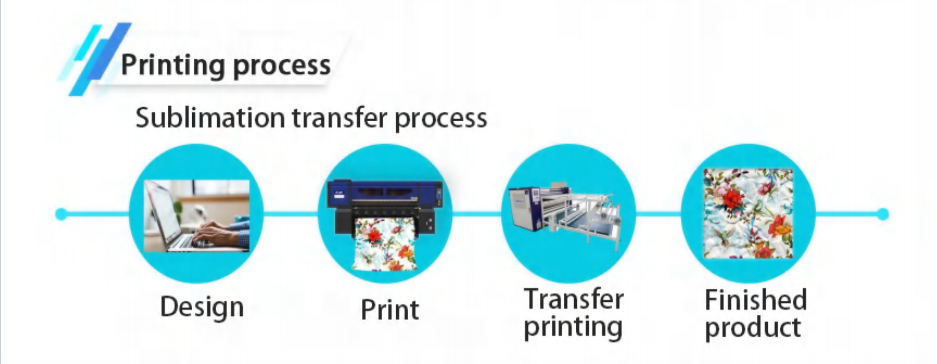
Step 1: Pattern Optimization and Mirror Pre-printing Treatment Conduct pattern layout design, color calibration, resolution optimization and color layering according to order requirements. Mirror flipping pretreatment is required for finished patterns based on the process characteristics of thermal sublimation transfer. Preprocessed patterns are accurately printed on thermal sublimation transfer paper via professional thermal sublimation digital printing equipment and special water-based sublimation dye ink. The printing resolution reaches 600–1200 DPI, which can accurately restore gradient colors, light and shadow layers, fine textures and complex artistic patterns to meet high-precision printing production standards.
Step 2: Substrate Alignment and Sealing Fixation Pre-printed thermal sublimation transfer paper is accurately aligned and attached to the substrate to be processed, with four edges sealed and fixed by high-temperature resistant special adhesive tape. This effectively avoids process defects such as transfer paper displacement, pattern misalignment, ghosting and faint printing under high-temperature hot pressing conditions, ensuring printing dimensional accuracy and pattern integrity. This process is mainly applicable to polymer chemical fiber fabrics such as polyester and terylene, as well as hard substrates including ceramics, metals, glass and acrylic with modified polymer coatings on the surface.
Step 3: High-temperature and High-pressure Sublimation Transfer Forming The fixed substrate assembly is placed into the hot pressing transfer equipment for constant temperature and constant pressure hot pressing operation within the industry standard parameter range (temperature: 200–230℃, working pressure: 0.3–0.6 MPa, pressure holding time: 10–30 seconds). Under high-temperature and high-pressure conditions, sublimation dyes complete the solid-gas phase transition. Gaseous dye molecules penetrate the substrate surface structure, embed into the fibers, achieve physical bonding between dyes and fibers, and complete pattern setting.
Step 4: Constant-temperature Cooling and Paper Stripping Setting The substrate is taken out after hot pressing and cooled naturally in a room-temperature clean environment. The surface transfer paper is stripped after the internal dye molecules are completely cured and structurally stabilized. At this stage, patterns are firmly embedded inside the substrate fibers without surface pigment accumulation or colloid coating, forming an integrated embedded printing effect and fundamentally guaranteeing the air permeability and adhesion stability of finished products.
Step 5: Performance Testing and Finished Product Warehousing In accordance with national textile printing inspection standards, finished products are tested in multiple indicators including color fastness, surface flatness, pattern definition, washing resistance, friction resistance and weather resistance. Products with color difference, blurriness, partial missing printing, texture defects and other quality problems are screened out, and qualified products are packed and warehoused for delivery. This process requires no water washing or color fixing treatment, involves no subsequent chemical procedures, and produces no wastewater or waste residue during production.
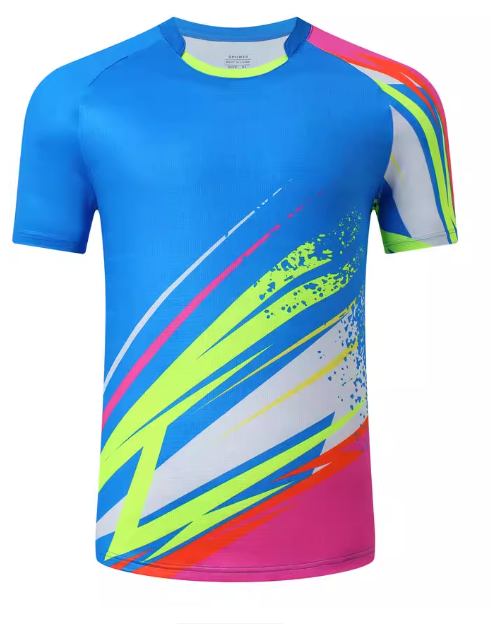
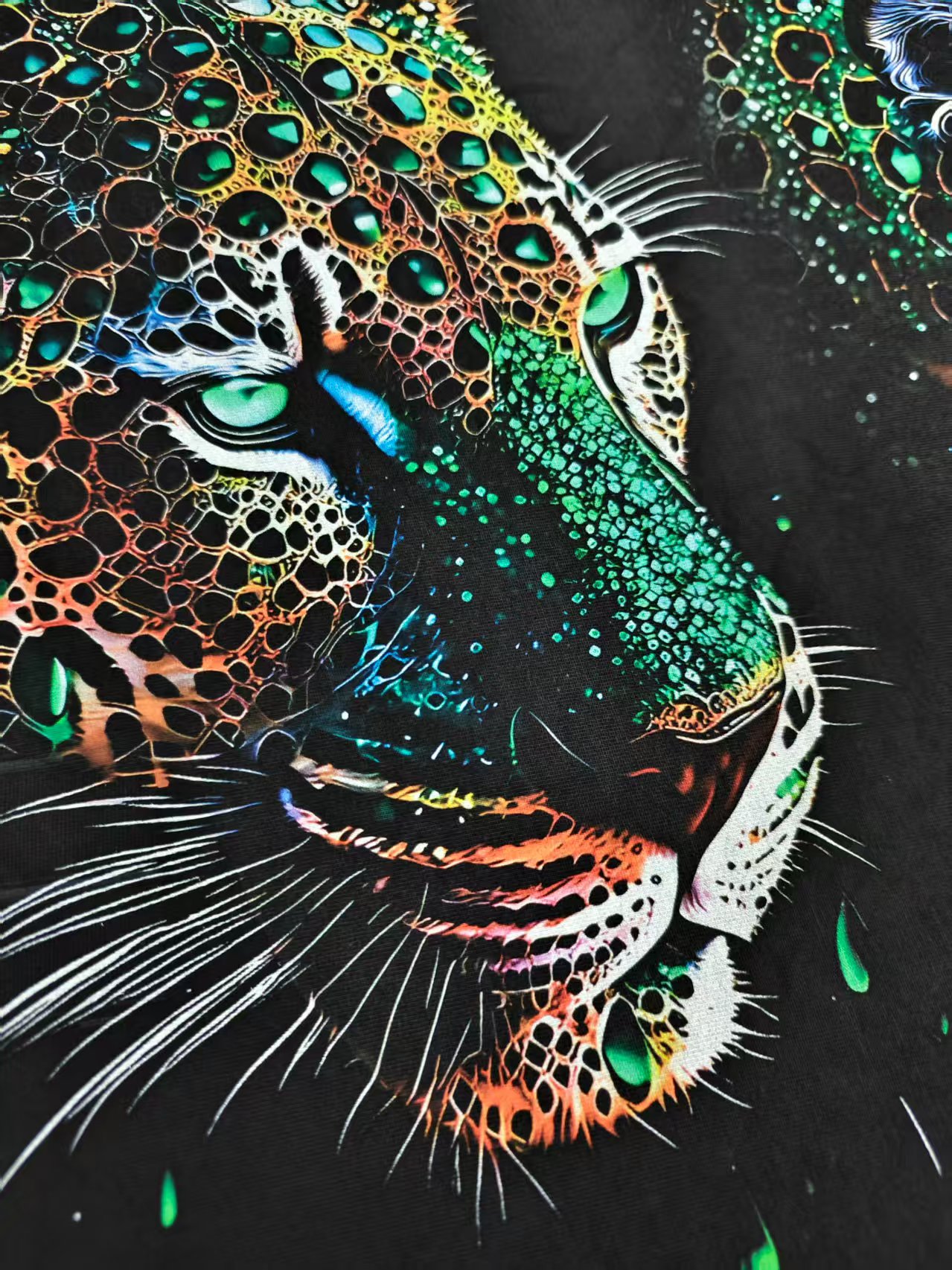
II. Core Differences Between Thermal Sublimation Printing and DTG Printing
Thermal sublimation printing and DTG printing are two mainstream technical systems in the current digital printing industry. Substantial technical differences exist between the two processes in forming mechanism, substrate adaptation system, physical performance of finished products, production and operation costs, and mass production adaptation modes, corresponding to differentiated industrial application scenarios. A systematic and standardized comparative analysis is conducted as follows.
1. Differences in Imaging Principle and Process Logic
Thermal sublimation printing is an indirect transfer printing process that realizes embedded combination of dye molecules and substrate fibers through the composite procedure of "medium pre-printing + high-temperature phase change penetration". The forming process is a pure physical phase change reaction without pigment accumulation or surface coating thickness. DTG printing is a direct jet printing process that sprays pigment ink directly onto the fabric surface without transfer media, and completes pattern adhesion through high-temperature drying and color fixing, with patterns completely attached to the substrate surface and presented via ink coating.
2. Differences in Applicable Substrate Scope
Thermal sublimation printing has strict requirements on substrate fiber composition and surface structure. It is only applicable to terylene, polyester and other polymer chemical fiber fabrics, as well as hard substrates with special modified coatings, and cannot form effective patterns on natural cellulose fiber substrates such as cotton, linen and silk, resulting in a relatively vertical and single substrate adaptation system. DTG printing is mainly applicable to natural cellulose fiber substrates, stably applied to pure cotton, cotton-linen, silk and other fabrics, and compatible with various cotton blended substrates. As the mainstream process for natural fiber fabric printing, it has a wider substrate coverage.
3. Differences in Hand Feel and Durability of Finished Products
Finished products of thermal sublimation printing featurenon-touch and integrated forming. The hand feel, air permeability and softness of printed areas are completely consistent with the original substrate without heaviness or coating barrier. Since dyes are embedded inside fibers, the finished products have excellent washing resistance, dry and wet friction resistance and UV aging resistance, with no fading, cracking or peeling during long-term use, and the color fastness meets the highest national testing standards for textile finished products. Patterns of DTG finished products are formed by surface ink coating, resulting in coating accumulation and slight rubbery feel in large-area printed areas and reduced fabric air permeability. Long-term washing and friction easily cause coating aging, color whitening and fading, leading to overall lower durability than thermal sublimation products.
4. Differences in Production Mode and Cost
Thermal sublimation printing is suitable for medium and large-batch standardized mass production. In large-scale production, the unit consumption cost and labor cost are extremely low with efficient and stable production rhythm and no secondary processing procedures, while the process cost and time cost of small-batch fragmented sampling are relatively high. DTG printing adapts to the small-batch, multi-category and flexible customized production mode. It requires no plate making or transfer media and supports on-demand printing, with significant advantages in sampling flexibility and response speed, suitable for e-commerce customization, niche styles, sample garment development and other fragmented orders. However, it has higher comprehensive production costs and obvious efficiency bottlenecks in large-scale mass production.
5. Differences in Color Performance and Accuracy
With uniform forming via gaseous dye penetration, thermal sublimation printing delivers uniform color gradient and delicate layers without dot graininess, achieving high-precision restoration of gradient colors, low-saturation light colors and complex artistic textures with excellent color consistency and reduction degree. DTG printing features high color saturation and contrast, but fine dot textures are prone to appear in large-area solid color regions, and its accuracy and delicacy in presenting light colors and ultra-gradient images are inferior to thermal sublimation printing.
III. Application Environment and Scenario Segmentation of the Two Processes
Based on the technical characteristics, production efficiency and finished product performance differences of the two processes, there are clear segmentation boundaries in applicable production conditions, factory environments, application fields and operation modes. Manufacturing enterprises can select processes and deploy production lines accurately according to their order structure, production line scale and business positioning.
1. Applicable Environment and Scenarios of Thermal Sublimation Printing
In terms of production environment, thermal sublimation printing equipment features high integration, small floor space and low operating noise. The entire production process produces no wastewater, waste residue, waste gas or other pollutants, requiring no supporting sewage treatment, waste gas treatment and other environmental protection auxiliary equipment. It has low requirements for factory infrastructure and can be put into production in standardized general workshops and small and medium-sized professional processing workshops, highly adapting to automated assembly line mass production conditions. In terms of application scenarios, this process mainly serves mass chemical fiber products, including functional sportswear, chemical fiber home textile fabrics, advertising banners, soft furnishing fabrics, as well as coated modified ceramics, metals, acrylic and other hard cultural and creative products, specifically adapting to standardized medium and large-batch orders of more than 200 pieces.
2. Applicable Environment and Scenarios of DTG Printing
In terms of production environment, DTG printing requires auxiliary procedures such as fabric pretreatment, water washing color fixing and high-temperature drying, and continuous process cleaning wastewater is generated during production. Supporting facilities for wastewater collection, treatment and standard discharge are mandatory, leading to higher requirements for factory environmental protection supporting conditions and space, and it is only applicable to standardized factories with complete environmental protection supporting systems. In terms of application scenarios, it focuses on natural fiber fabric customization, including personalized printing of pure cotton garments, trendy clothing customization, sample garment R&D sampling, e-commerce fragmented customization and other scenarios, adapting to flexible production demands of single-piece, small-batch and multi-frequency orders.
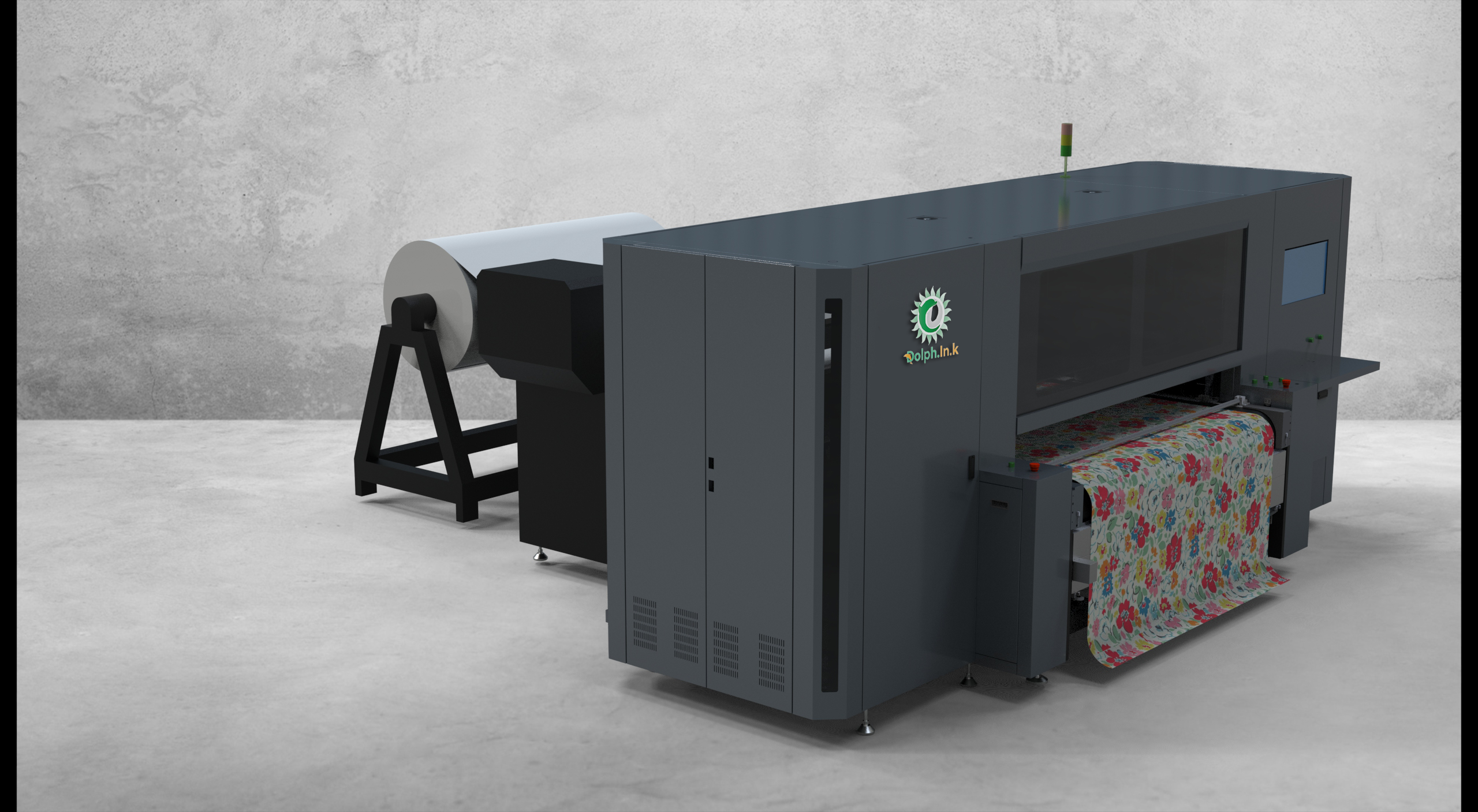
IV. Local Policy Adaptability Analysis of the Two Processes
At present, the national environmental protection management system for the textile dyeing and finishing industry is increasingly improved. All provinces and cities nationwide strictly implement national mandatory standards including the Discharge Standard of Water Pollutants for Textile Dyeing and Finishing Industry (GB 38400-2019) and the Standard for Non-organized Emission Control of Volatile Organic Compounds (GB 37822-2019). Environmental compliance and low-carbon production have become core access thresholds for the operation, capacity expansion and upgrading of printing enterprises, and the policy adaptability gap between the two processes is gradually prominent.
From the perspective of environmental compliance,thermal sublimation printing is a low-consumption, zero-sewage and low-VOC green printing process explicitly supported by national industrial policies. The entire production process involves no water washing procedures or process wastewater, with VOC emissions far below industrial control limits and no unorganized pollutant emissions such as dust and peculiar smell. It features simple EIA approval procedures and extremely low compliance risks. Enterprises do not need to invest heavily in supporting environmental protection facilities such as sewage treatment and waste gas treatment, realizing long-term stable compliant production and effectively avoiding environmental rectification, production restriction and shutdown risks commonly faced by small and medium-sized printing enterprises.
In contrast, DTG printing and traditional slurry printing require pretreatment sizing, water washing color fixing, equipment cleaning and other procedures, continuously generating a large amount of process wastewater. The operation and maintenance cost of wastewater treatment accounts for 12%–18% of the overall production cost of enterprises. Meanwhile, slurry and ink volatilization produce certain VOC waste gas, requiring complete waste water and gas treatment equipment as well as strict implementation of pollutant discharge permit and online monitoring management. Small and medium-sized enterprises are highly vulnerable to administrative penalties and capacity restrictions due to insufficient environmental protection supporting facilities and excessive pollutant discharge indicators, resulting in weak policy adaptability and risk resistance.
From the perspective of industrial policies, all provinces and cities in China are continuously promoting the green transformation and upgrading of the textile industry, issuing special policies to eliminate high-pollution and high-energy-consumption traditional printing processes and focusing on supporting energy-saving, low-carbon and efficient modern digital printing technologies. Thermal sublimation printing conforms to the development orientation of green, high-end and intensive upgrading of the textile industry and belongs to an industry-encouraged production process. In many regions, enterprises adopting such new green processes and equipment can enjoy policy dividends including technological transformation subsidies, tax reductions and exemptions, and preferential approval for capacity expansion, helping enterprises reduce costs, increase efficiency and expand production in compliance with regulations.
Meanwhile, segmented industries such as cultural and creative manufacturing, sporting goods and home textiles are promoting quality upgrading and standardized construction, and the market has continuously improved requirements for the accuracy, stability, durability and environmental performance of printed products. The core advantages of thermal sublimation printing including high precision, high color fastness, zero pollution and scalable mass production highly adapt to the upgrading needs of various segmented industries, making it the optimal solution for printing enterprises to complete process iteration, compliant transformation and quality and efficiency improvement at this stage.
V. Industry Selection Summary and Development Trend
Comprehensive analysis of three core dimensions including technical performance, scenario adaptation boundary and environmental policy compliance shows that there is no absolute superiority or inferiority between thermal sublimation printing and DTG printing, but only differences in industrial positioning. Enterprises focusing on medium and large-batch standardized mass production of chemical fiber products, low-carbon compliant production and low-cost stable production give priority to thermal sublimation printing; enterprises focusing on natural fiber fabric customization, small-batch flexible production and rapid sample R&D are suitable for DTG printing. At present, the industry has formed a collaborative production model of large-scale mass production via thermal sublimation and flexible supplementary production via DTG, which has become the standardized and normalized mainstream operation system of the digital printing industry.
Under the background of continuously tightened environmental policies, upgraded terminal product quality standards and accelerated industrial low-carbon transformation, the green, efficient and high-precision thermal sublimation printing process will continuously replace traditional high-pollution and high-energy-consumption printing processes. Its market penetration in segmented fields such as functional textiles, home soft furnishing and cultural and creative signage will continue to increase, and it will serve as a core mainstream process supporting the high-quality, standardized and sustainable development of the digital printing industry in the long run.
Regardless of which digital printing solution you adopt,Dolphin New Material Co., Ltd. delivers professional, systematic and tailored overall application solutions to fully support your diverse production, customization and compliant upgrading demands.
Industrial Fabric Printing Machine: A Complete Guide to Direct-to-Fabric, DTF, DTG and Sublimation Printing
2026 Outlook for China & Global Digital Sublimation & Textile Printing Market
Related Article

When choosing an industrial fabric printing machine, it is important to consider more than just printing speed and price. Different digital printing technologies are designed for specific fabrics, production formats, ink systems and applications.
Industrial Fabric Printing Machine: A Complete Guide to Direct-to-Fabric, DTF, DTG and Sublimation Printing

Focusing on small‑batch quick‑turn production, domestic equipment replacement, eco‑friendly consumables and global emerging‑market opportunities, this article sorts out major changes within the digital printing sector, offering practical reference for overseas business development.
2026 Outlook for China & Global Digital Sublimation & Textile Printing Market
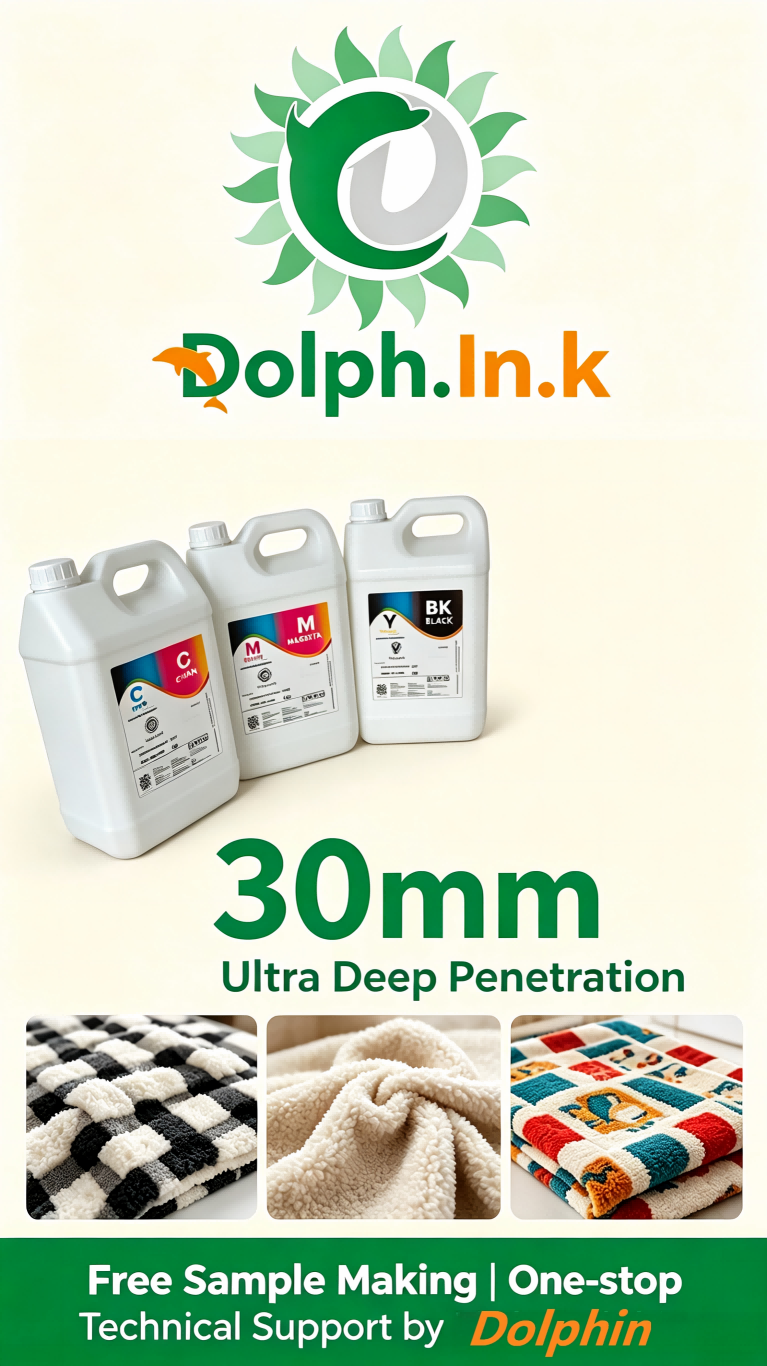
Dolphin high-penetration sublimation ink achieves up to 30mm penetration depth. Compatible with sublimation printers and heat transfer machines, it works for polyester and all wool & plush fabrics. We provide customized professional printing workflows for different materials and offer free sample testing to eliminate surface floating ink and uneven color on thick textiles.
Dolphin High-Penetration Ink | 30mm Deep Penetration for Polyester & Plush Fabrics

The much-anticipated 18th Qingdao International Textile Printing Industry Exhibition (referred to as the "Qingdao Printing Show") grandly opened at Qingdao Hongdao International Convention and Exhibition Center (No. 326 Huoju Road) on June 25, 2026.
Degao Jingdian and Weifang Lanyuan Textile reached a cooperation on-site at the Qingdao Printing Exhibition! The customer successfully placed an order for the Degao Jingdian M9-64 digital printing machine.